
How restaurants tap into cellular networks to enhance efficiency and customer experience
by Webbing Team | December 9, 2025
Restaurants have relied on cellular connectivity for critical tasks longer than most customers realize. In the early 2000s, cellular technology showed up mainly through SIM-based payment terminals that could authorize card transactions anywhere there was signal. By 2015, restaurants were already using cellular networks for internet access as a failover backup. Today, it has evolved from niche solutions into a core layer for modern restaurant tech: cellular networks provide internet access, device connectivity for ordering and payment, and even continuous IoT monitoring.
This development has impacted the industry as well. The ability to launch a restaurant without waiting for fixed infrastructure, using public cellular networks as primary connectivity instead, removes a major bottleneck to opening and scaling. Now restaurant operators can bring a new site online in days instead of months, and start taking digital orders and card payments immediately. That accelerates growth for chains and enables pop-up formats in new, nontraditional locations.
The scale of the industry also makes that technology shift matter. According to the U.S. National Restaurant Association, there are more than 1 million restaurants and foodservice outlets in the country, which means that even small changes in connectivity choices result in significant operational impact. Investments in technology are growing: the Restaurant Technology Landscape Report 2024 showed that digital operations are now mainstream rather than optional, with three-quarters of restaurant operators expecting technology to give them a competitive edge.
But how exactly is cellular technology used in everyday restaurant operations? Let’s take a look at the most common use cases to understand.
Primary Internet or Failover: The Growing Role of Cellular in Restaurant Networks
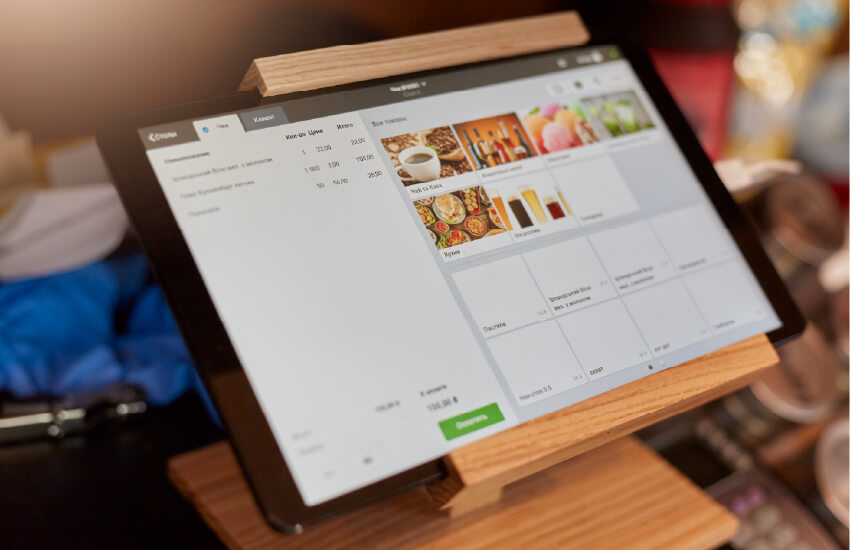
Some restaurants use a 4G or 5G router as their primary internet connection when fixed communication isn’t available, is too expensive, or takes too long to install. The cellular link becomes the site’s internet line, powering everything that needs to be online. The big advantage is speed and simplicity: a new location can be brought online in hours or days rather than waiting months for construction and arrangements with connectivity providers.
A good example is Salad and Go, a drive-thru chain with around 140 locations across Arizona, Texas, Oklahoma and Nevada. Salad and Go was planning up to 100 more locations and needed reliable network infrastructure. Traditional broadband meant months-long delays and high costs, so to avoid broadband entirely and target near-100% uptime, they adopted a dual-cellular 5G internet approach. It was deployed in under 48 hours instead of typical 4–6 month install timelines, provided reliable bandwidth and eliminated construction-related expenses, saving up to $20,000 per location.
Another common scenario is cellular failover. Many restaurants keep their traditional wired broadband but add a cellular connection as an automatic backup. If the main internet connection goes down or its quality decreases, the network switches over to LTE or 5G so the restaurant can keep taking card payments and receiving online orders. This use case is mainly about business continuity, as it helps prevent a short internet outage resulting in lost revenue or missed orders.
For instance, Fuzzy’s Taco Shop uses an LTE-backed network, so each restaurant stays reliably online as the chain scales. In each of their existing restaurants, they deployed a single LTE-embedded router, because everything, from digital signage updates to music systems, depends on connectivity. The result was standardized 99.99% uptime at locations and fewer on-site service visits.

From Handheld POS to Kiosks: Why Restaurants Are Leaning on Cellular Connectivity
A recent survey of 264 restaurant professionals shows that restaurants use handheld point-of-sale (POS) systems and self-service kiosks to serve guests faster, grow revenue, and streamline operations. According to the research, 68% of operators now deploy handheld POS systems for line-busting or table-side ordering. As for the kiosks, more than half of restaurants surveyed use them, and 67% reported higher average checks, driven by upsell prompts and guest autonomy.
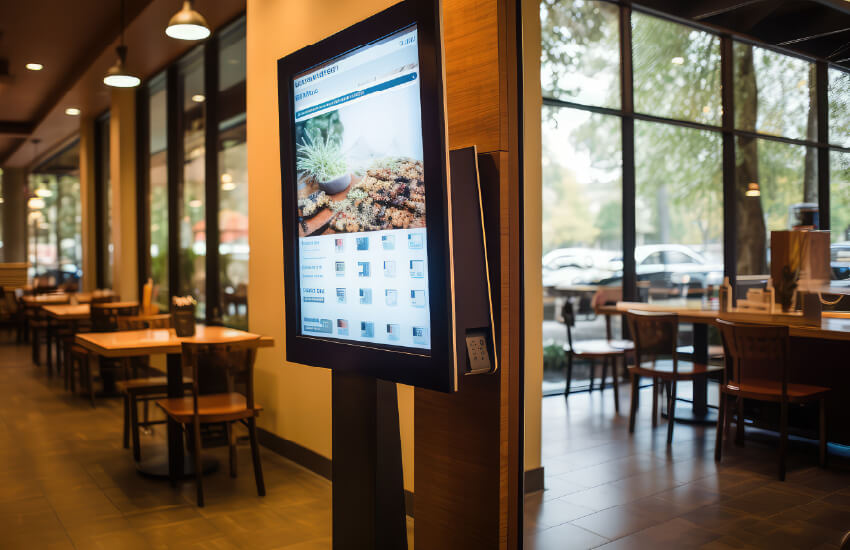
Restaurants use cellular connectivity for payment terminals and ordering kiosks in two main ways. With standalone payment terminals and some handheld readers, usually the device itself has LTE or 5G, to allow them to authorize payments even when there is no Wi-Fi signal. Certain kiosks may also be equipped with cellular modems, but more typically, they run on the store’s local network, which, as we already know, can either be cellular-enabled, or have cellular failover so that ordering and payment flows can keep working if the fixed line is down.
A Cradlepoint leaflet on using 5G for failover protection in McDonald’s explains how cellular failover maintains high-speed connectivity during outages for data-intensive tasks such as real-time order processing at various McDonald’s locations across the globe.
Always-On Monitoring: How Cellular Connectivity Reduces Waste in Restaurants
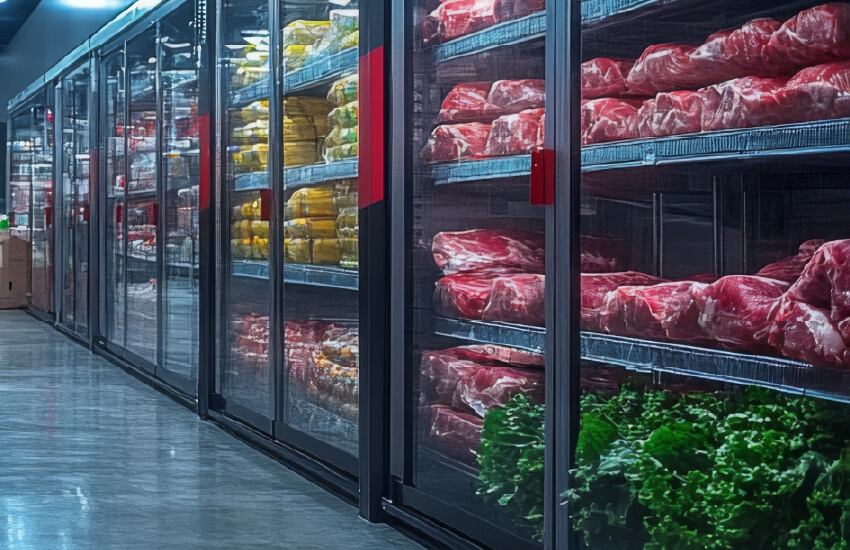
The average restaurant wastes 4-10% of all food inventory they purchase. To avoid spoilage, restaurants use cellular connectivity to link critical sensors, most commonly freezer temperature or HVAC status, to the cloud through a cellular modem or gateway. This way they can keep monitoring working even if the restaurant’s Wi-Fi is down or gets reconfigured. That always-on connection lets the system send real-time alerts and enable remote troubleshooting.
Some vendors explained that cellular connectivity is the best choice for remote temperature monitoring since Wi-Fi can be unreliable in restaurants due to weak signals and power outages. They use cellular data as a more dependable path between sensors and the cloud.
There are other use cases specific to restaurant businesses that demand IoT solutions. For instance, restaurants need grease interceptors to capture fats, oils, and grease before they enter the sewer system. Cellular networks help here, too: cellular enabled grease traps keep track of how full a grease interceptor is, so operators don’t have to guess when to pump it.
Connectivity Requirements for Restaurants
Although there are different scenarios where restaurants implement cellular connectivity, most of them have similar connectivity requirements.
Coverage
Coverage determines whether a restaurant can get a strong, stable signal inside the building, so payments and online orders don’t randomly slow down or drop. Also, good coverage across key areas such as patio or curbside makes cellular-dependent devices like handheld POS reliably work everywhere they’re needed.
Since certain operators may have problems with coverage within buildings or in remote locations, it is important that cellular-enabled devices are able to use multiple networks. However, using multiple networks means contracting with multiple mobile operators, which is complex and can be costly both in terms of time and expenses.
Scalability
As a restaurant adds more locations or devices, the network must handle more connections and more traffic without becoming unstable. Scalability also means the ability to roll out the same time-proven setup everywhere, without needing custom work at each site. Finally, scalable cellular plans allow to increase capacity as demand grows, instead of suffering outages at peak hours.
Compliance with Regulations
Restaurants handle payment data and sometimes customer data, so they must comply not only with data protection regulations, but also with very strict cybersecurity rules. Although mobile networks are secure by design, it’s not an easy task: starting with strictly technical aspects, there are also general regulations on data transfer, privacy and sovereignty, as well as local regulations that need to be complied with. To make it worse, legislation is always subject to change. That means that restaurants deploying cellular-connected devices may have problems down the line if their connectivity solution is not adaptive enough to comply with regulations.
Simplicity & Centralized Management
Most restaurants don’t have IT staff on-site, so the network needs to be easy to deploy and support remotely. With a centralized connectivity, they can push the same configuration to every location, monitor uptime and fix issues without sending a technician. It can also help to reduce mistakes like misconfigured Wi-Fi and standardize security updates and failover behavior.
No Dead Zones, No Downtime: Webbing’s Connectivity Advantage for Restaurants
Webbing offers a connectivity solution that gives restaurant operators reliable, high-quality internet access with low latency and strong coverage, helping keep locations online for critical operations. It provides a secure and continuous connection for restaurant systems such as payment terminals or operational IoT sensors across single sites and entire chains.
Webbing’s connectivity solution guarantees global coverage, and through our ecosystem of over 600 mobile operators worldwide, devices can roam seamlessly across multiple carriers’ networks in every region. It solves the problem of weak spots that any mobile network may have and ensures full coverage and consistent connectivity for restaurant environments, whether in dense urban areas or remote sites where coverage from any single carrier may be uneven.
Webbing is a global connectivity provider with a distributed full-core network, local breakouts, multiple network options, and data-center redundancy designed for stability and low latency. This makes the network well suited for mission-critical use cases, including payment transaction connectivity and security surveillance. It also allows for all types of localization, making it easy for restaurant operators to comply with local and regional connectivity regulations. Webbing also offers a portal that helps manage connected devices in bulks and monitor data usage of each device.
A flexible approach to data packages allows us to tailor our connectivity offering for every customer based on the type of connected devices and their data consumption needs as well as the locations where the devices are used. Whether it’s lightweight IoT sensors, always-on kiosks, or higher-throughput routers supporting a full restaurant network, we’re aiming at overall optimization of the total cost of operations for the client.
Webbing helps restaurant operators overcome connectivity constraints and reduce time-to-open for new locations and rollouts, providing the benefits of roaming with multiple carrier options and seamless transition between carriers with a single SIM.
Reach out today to learn more about Webbing’s connectivity solutions for the restaurant industry.