
Why the biggest value of connected vehicle technology lies beyond the consumer segment
by Per Gadenius | March 19, 2026
Cellular connectivity has become close to a de facto automotive standard in new vehicles. Adoption in the consumer segment continues to grow. In their latest report, Berg Insight estimated there were 286 million embedded telematics subscriptions in passenger cars globally in 2024 and forecast that this number will exceed 500 million by 2029. According to Berg, these systems, which use cellular communication for services like eCall, roadside assistance and stolen vehicle tracking, were present in 79% of new cars sold globally in 2024, and Counterpoint reported a similar figure.
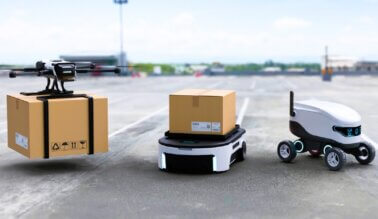
But the benefits of connected vehicle technology extend far beyond the consumer segment. Alongside connected passenger cars on the road, and what is maybe more important, oftentimes off the road, a wide range of vehicles rely on the same technology. Commercial truck fleets, buses, agricultural machinery, construction equipment, trailers and log-haulers all benefit from the same technologies, and in many cases they may benefit even more than passenger vehicles.
Let’s take a look at several examples.

Commercial Truck Fleets
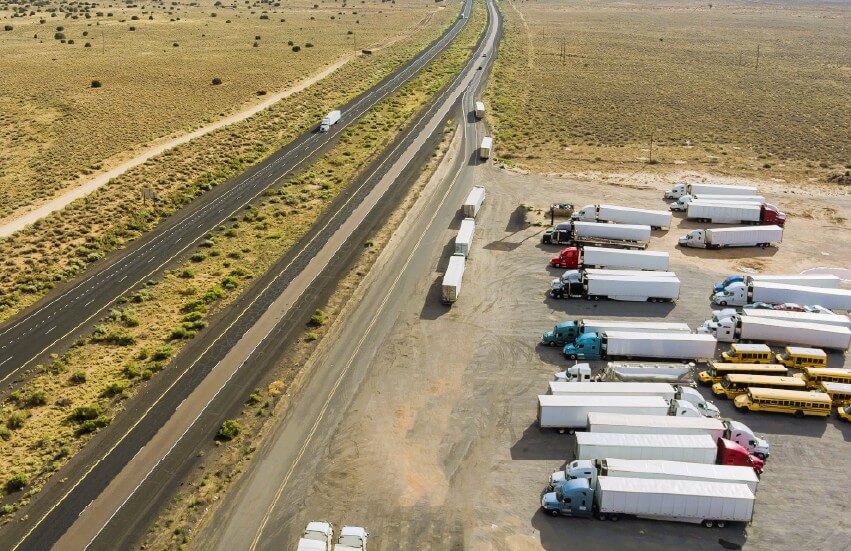
Commercial freight and service fleets show some of the clearest measurable gains from connected vehicle technology. The installed base is already very large here – Frost & Sullivan’s 2024 Connected Truck Telematics study reported over 50 million connected truck telematics units globally. The value drivers are direct: fuel consumption, downtime, route efficiency, compliance, and driver safety all can be improved using the data from cellular-enabled sensors and cameras.
For trucks and delivery vans, the key unique application for connected car technology is fleet management. Research shows 19.2 million active fleet-management systems in North American commercial fleets and 18.1 million in Europe in 2024, with both figures forecast to grow further. A 2024 global telematics survey by Teletrac Navman also found 96% of respondents reported measurable savings, whether through reduced administrative time, lower fuel use, or overall cost reductions.
OEMs are well aware of the advantages the technology brings and have been deploying it in different forms for years. For example, Volvo Trucks, which had more than one million connected trucks all over the world as of September 2025, is using analytics to provide necessary servicing and preemptive maintenance. To support connected services, the company has multiple partnerships with major software vendors: SAS for remote diagnostics analytics, Trimble for the development of fleet management software, and Noregon Systems for dynamic maintenance software.

Public Transit
In public transit, connected vehicles can benefit from all the advantages of telematics and infotainment, also from additional capabilities within the connected vehicle technology stack, such as V2X. A good real-world example is Boston’s MBTA transit signal priority deployment on Brighton Avenue. The system relies on real time bus location data and machine learning prediction of bus arrivals to adjust traffic signals and reduce delay for public buses. According to the U.S. DOT ITS Joint Program Office, the deployment led to 8% faster bus travel times, equal to about 16 seconds saved per bus for a combined total of 110 minutes saved each weekday on two tested routes. The results were strong enough that MBTA and the City of Boston announced a citywide expansion in January 2025.
The technology is used not only for regular city buses. Signal priority tested on cellular connected school buses in Fulton County, Georgia, resulted in more than a 40% decrease in stops and more than a 13% reduction in travel time, as well as a 7.4% decrease in fuel consumption for propane and 12.4% for diesel.
Of course, bus operators also use cellular networks for monitoring and maintenance purposes. For instance, DB Regio Bus has equipped almost all of its 5000 buses with telematics devices that leverage cellular connectivity to report and analyze technical anomalies, from information about the brake pads and individual fault codes, to other important indicators of vehicle condition.
Construction, Mining, and Forestry Machines
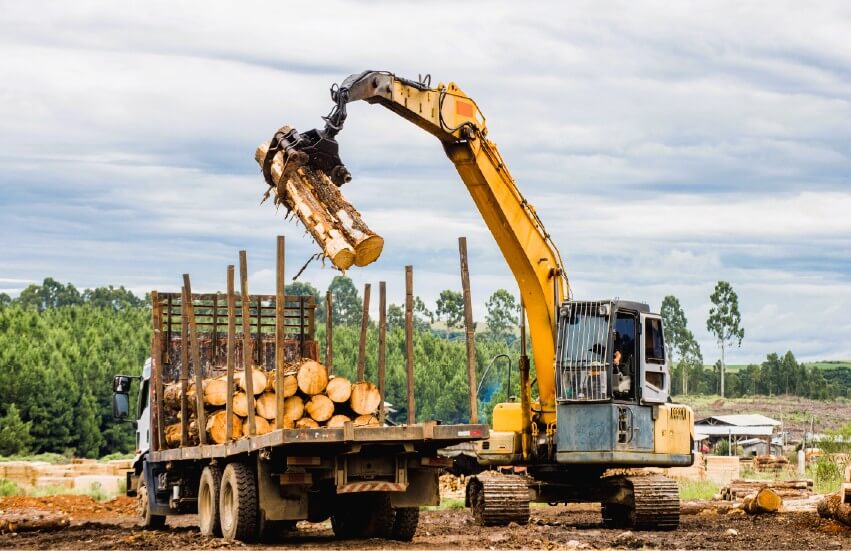
For off-highway vehicles, the main benefits of connected vehicle technology is productivity and uptime. Berg Insight estimates the global installed base of active off-highway vehicle telematics systems reached 10.0 million units in 2024, including construction, mining, agriculture, and forestry machines. Construction is the largest off-highway segment, with 6.8 million active units reported in 2023. Major manufacturers count their connected assets in the millions: for instance, Caterpillar was the first to surpass the milestone of 1 million and the company now has more than 1.5 million units.
Connected vehicle technology supports a wide range of heavy machinery applications in these industries. For example, Komatsu describes a deployment where it helped a mine optimize its haulage cycle and dramatically reduce truck idle times by using automated real time communication between the crusher operator and the central dispatcher. Its connected fleet management system linked crusher status with dispatch decisions so trucks could be rerouted in real time instead of idling in queues when the crusher was down.
Skogforsk, the Forestry Research Institute of Sweden, uses connected Fujitsu forest machines for remote operation. The connected setup enables real-time transmission from cameras and sensors, and lets one operator control multiple vehicles, which improves both productivity and safety.

Agriculture
In agriculture, connectivity improves four things that matter directly to farm economics: field efficiency, input precision, uptime, and labor productivity. Connected vehicle technology helps reduce overlaps and skips in the field, lower fuel and input use, lessen operator fatigue, improve machine utilization, and support better agronomic decisions. Adoption is becoming mainstream at the farm level. USDA reports that in 2023, guidance autosteering systems on tractors, harvesters, and other equipment were used by 52% of midsize farms and 70% of large-scale crop-producing farms.
OEMs are building connected ecosystems around these capabilities. John Deere says connectivity is central to the value of its Operations Center, a cloud platform designed to improve productivity and decision-making. In its 2024 Business Impact Report, Deere said it had reached 775,000 connected machines and 455 million engaged acres, and reported 17% year-over-year growth in acres actively using its technology services. Deere also says that connected precision technologies can reduce costs and inputs such as fertilizer and herbicide.
Connectivity Requirements
Different as these industries and vehicle types may be, they share a number of common connectivity requirements:
Coverage
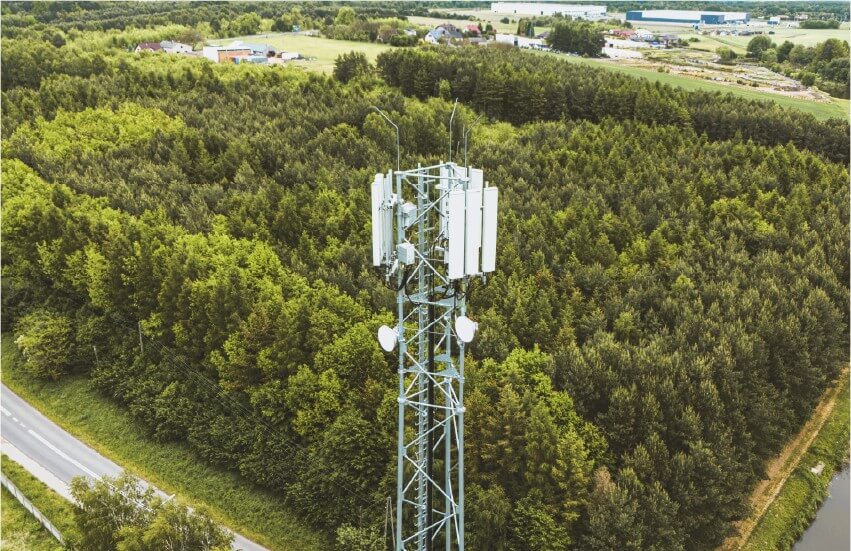
For all of these use cases, the first critical requirement is reliable network coverage wherever the vehicle operates. Commercial trucks cross national borders, buses may move through suburban zones, while construction and agricultural machines often work in remote areas. If connectivity drops too often, the entire value proposition of connected vehicle technology weakens: live tracking, diagnostics, dispatching, machine monitoring, field coordination all depend on the vehicle staying within reach. That is why these sectors need broad-area coverage, strong rural performance, and seamless roaming or multi-network continuity
Webbing has built a global connectivity ecosystem spanning more than 600 mobile operators worldwide. This allows connected vehicles to roam seamlessly across multiple carrier networks in different regions, reducing dependence on a single operator and helping overcome local coverage gaps. For customers deploying connected vehicles across borders or in remote areas, this multi-operator approach helps maintain continuous connectivity and improves resilience.
Low Latency
Not every connected vehicle application needs ultra low latency, but many important ones are technically impossible without it. For example, public transit signal priority or teleoperation scenarios need data to move quickly and predictably. Theoretically, cellular networks can deliver latency as low as 1ms, but actual latency depends on the connectivity provider’s core network architecture, because data needs to go all the way to the provider’s data center before going to its destination.
Webbing owns a distributed full-core network with local breakouts and data centers on every continent. This architecture is especially relevant for connected vehicle deployments that involve real time monitoring and high data consumption.
Uplink Capacity
Connected vehicles send continuous streams of data back to platforms in the cloud: location, engine health, fault codes, fuel consumption, camera feeds, usage metrics, and workflow data, which makes strong uplink performance a core requirement. That makes strong and reliable uplink performance a critical requirement, especially for video monitoring and predictive maintenance.
Webbing’s core network is well suited to support all types of use cases, including mission-critical and high data consumption. We also do not throttle or restrict data at any level but enable the capability for customers to throttle as they see applicable with our on-demand usage control policies.
Webbing’s Connectivity Solutions for Connected Vehicles
Webbing offers a connectivity solution that ensures global access to reliable and high-quality internet, with low latency and the best of class coverage. It provides secure and continuous internet connection for all types of connected vehicles, wherever and whenever they need it.
Our eSIM solution guarantees failover connectivity with the capability of using multiple mobile carrier profiles, easily changing carriers at any time with zero integration, and an option to fall back from a failing profile to a different profile without any need to communicate with a remote server or deal with multiple SIM cards. Easily set business rules help determine automatic profile allocation based on location and enable fallback mechanisms in case of private network failure or coverage issues.
A flexible approach to data packages allows us to tailor our connectivity offering for every customer based on the type of connected devices and their data consumption needs as well as the locations where the devices are used, aiming at overall optimization of the total cost of operations for the client.
Our solutions help companies that deploy connected vehicles overcome their connectivity challenges and optimize costs for global deployments, providing the benefits of roaming with multiple carrier options in every country, and seamless transition between carriers, public and private networks, while maintaining low rates and low latency on a global scale with a single SIM.
Reach out to learn more about Webbing’s customized connectivity solutions for connected vehicles.