

How modern fashion production depends on resilient connectivity
by Webbing Team | March 31, 2026
At first glance, fashion and telecommunications do not seem to have much in common. Nor does it seem obvious that fashion shows would become a frontier of connectivity and broadcast innovation. That assumption, however, only makes sense from a distance. Anyone who has worked closely with the industry knows that behind the runway, beyond the front row, and far from the photographers’ pit, a parallel production is taking place: one led by broadcast engineers and live video operators working to make sure every frame arrives exactly where it needs to go, in real time, with no margin for error. The connectivity infrastructure that makes this possible is invisible to the audience — and that is precisely how it should be.
Paris Fashion Week, the official series of shows and presentations coordinated by the Fédération de la Haute Couture et de la Mode, is often described in terms of mood and cultural relevance. But from a technical point of view, it is also one of the most demanding live production environments in the world, where connectivity failures are not an option. Xavier Deschuyteneer of Octal, an engineering specialist supporting many fashion productions, shared a closer look at the connectivity challenges behind Paris Fashion Week and how global cellular connectivity has become critical infrastructure for the industry.

When location becomes the biggest challenge
What makes fashion events especially demanding for broadcast teams is that they combine the expectations of premium live production with locations that were rarely designed for it. The first challenge is almost always the venue. Paris Fashion Week shows are often staged either in existing spaces like the Picasso Museum, a former military hospital, the Gallery of Mineralogy and Geology, a luxury hotel, or in custom-built venues set up in picturesque locations such as Montmartre or the Jardin des Tuileries. These places may be visually perfect for fashion, but they are often the least cooperative when it comes to connectivity. All these locations tend to share one major technical drawback: getting reliable internet with sufficient bandwidth is extremely difficult.
In many cases, the job goes far beyond simply delivering a few live streams for broadcast. Production teams may also need to provide IPTV for backstage operations, as well as private streams for the organizer’s internal network, retail shops, employees, partners, and clients.
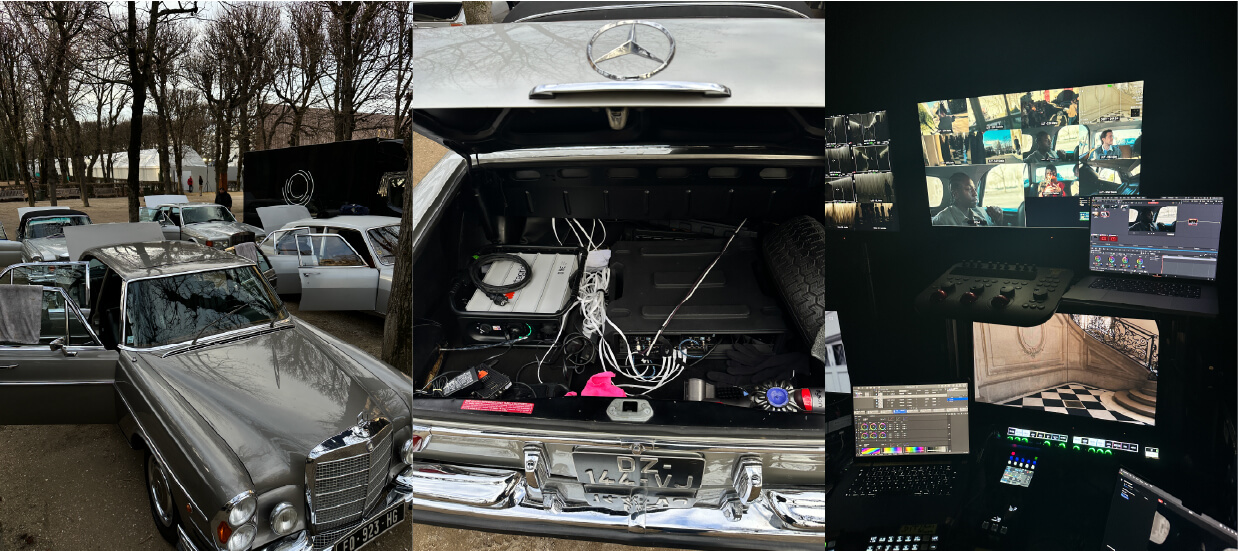
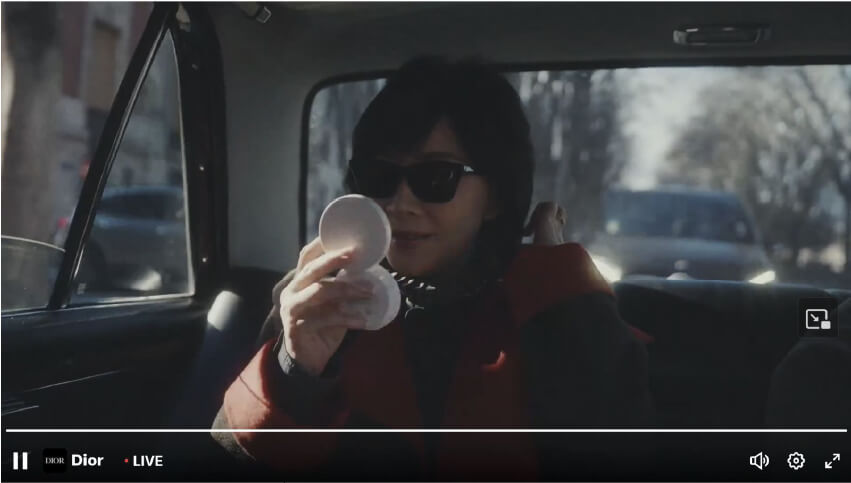
Sometimes the challenge becomes even more complex. At one Paris Fashion Week production, Octal had to stream video from moving cars transporting VIPs from their hotels and palaces to the venue. The production demanded broadcast-quality video from multiple cameras in each vehicle, with uninterrupted coverage throughout the journey. That required a sophisticated mobile streaming setup capable of capturing the guest experience while the vehicles moved through central Paris, one of the hardest urban environments for stable live transmission.
This is where the difference between professional broadcast encoding systems and what engineers call “consumer grade” backpack solutions becomes clear. While the latter excel at news gathering and quick deployments, high-end productions demand a different approach. Standard backpack solutions can’t provide sufficient quality, latency and reliability for unique scenarios such as streaming for 10 consecutive hours from four cars driving through central Paris without losing a single frame.
The technical standard behind the image
Video quality and latency requirements vary depending on the use case. Sometimes organizers need ultra low latency (less than 200 milliseconds) because the monitoring position is so close to the live action that delayed sound becomes a problem. In other cases, latency below one second is necessary because camera operators are shading the cameras remotely. If someone adjusts white balance or exposure and sees the result only 30 seconds later, the workflow becomes impossible. Some jobs allow for a two-second delay as a more forgiving “set it and forget it” configuration that holds up even on weaker internet connections. But in Xavier’s experience, the majority of fashion productions fall into the first two categories, where both quality and responsiveness are critical.
In these environments, broadcast teams need dedicated encoders and decoders designed for professional workflows. Octal relies on Open Broadcast Systems solutions because they offer the kind of performance these projects require: robust hardware for continuous operation, superior video quality with higher bitrates and professional codecs, and smooth integration into broadcast environments.
A highly specific setup for highly unpredictable events
Octal specializes in the kinds of projects where standard solutions do not work. Yet the challenge is not only technical complexity, but also unpredictability. As Xavier says, “You never know where you’ll end up, you never know the infrastructure, and you never know how many people will be on site streaming on Instagram when they see their idol.”
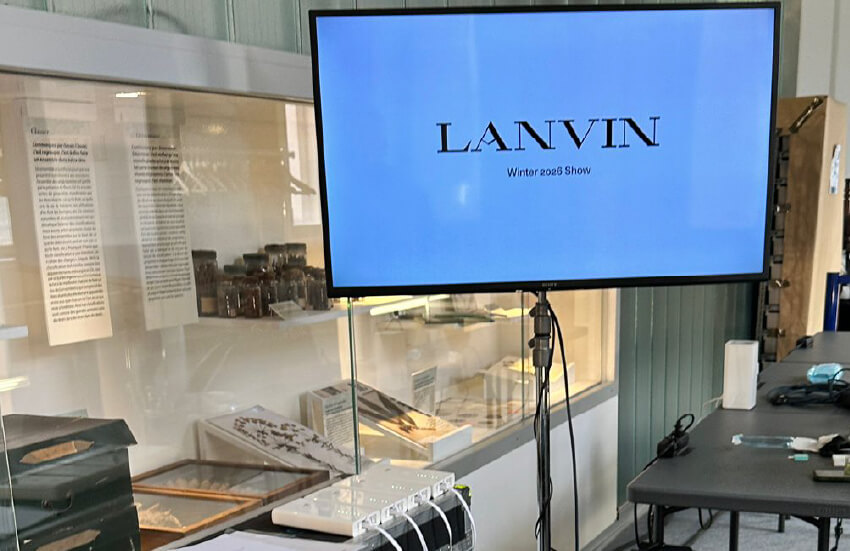
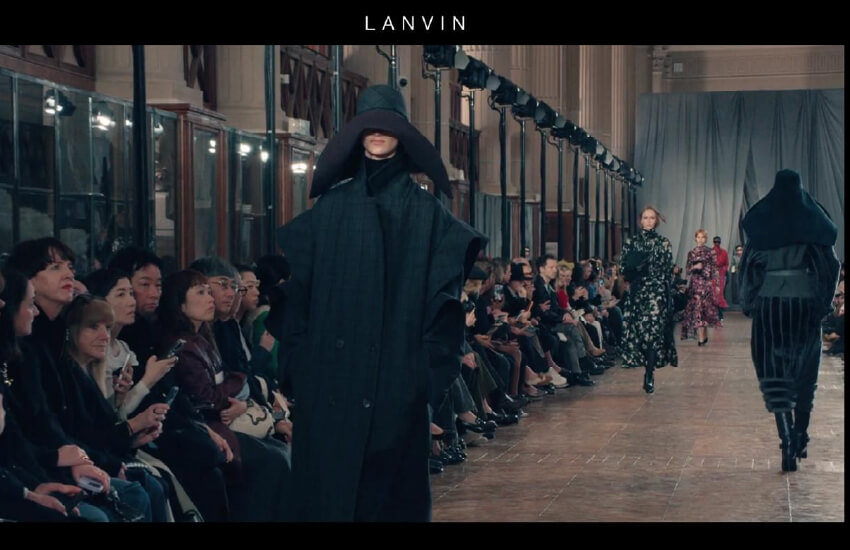
Each show requires a very specific setup and a connectivity approach that can be trusted even when local infrastructure falls short. In some venues, it is impossible to run uncompressed SDI video over cables to displays because of fire safety restrictions or rules against running cables through doors and passageways. Usually, a venue’s internal LAN can be used to carry Ethernet traffic instead, but sometimes that is not possible either. That was the case for Lanvin Fall 2026 show. Octal had to provide IPTV between two buildings separated by roughly 500 meters and a public street, while the event itself took place in the Gallery of Mineralogy and Geology, a venue with no available internet connection. The solution was to build the entire transport layer over 5G, powered by Webbing SIMs, with Starlink as a secondary layer.
Connectivity, in this context, becomes central to the entire production design. Xavier is direct about what changes when it is managed properly: the ability to rely on 5G without worrying about data consumption is a game changer. Without a solution like Webbing, teams have to source local SIM cards themselves, which can become a logistical headache. In some countries, buying a SIM requires local ID. In others, it involves subscriptions and uncertain terms. And data plans marketed as unlimited routinely throttle during sustained live transmission, exactly when reliability matters most. When something goes wrong, support is often non-existent. With Webbing, connectivity becomes predictable and repeatable, regardless of location, enabling teams to deploy faster and with far less operational friction.
This is why Octal’s setups rely on a multi-network architecture built around 5G. At its core, Open Broadcast Systems encoders and decoders, paired with weatherproof 5G modems, each connected to a different operator through Webbing’s global connectivity. The challenge is not just connectivity, it’s eliminating uncertainty in high-stakes, live environments. Webbing helps remove that uncertainty with reliable multi-carrier connectivity and truly unlimited data with no throttling. “It’s what makes the whole architecture predictable,” Xavier says. Just as critical is operational simplicity. Instead of sourcing local SIMs, managing contracts, or worrying about throttling mid-broadcast, teams can rely on a single global solution that works consistently across locations. But just as important is the quality of support: if something happens mid-broadcast, fast, clear updates and real visibility make a decisive difference when 5G is part of a professional broadcast workflow. In practice, this means production teams can focus on the show itself rather than troubleshooting connectivity under pressure. Zixi and AWS handle the signal bonding to turn multiple unstable signals into something robust enough for professional video. In many cases, that setup is complemented by Starlink as a backup layer in case operator’s network goes down or a local antenna becomes overloaded. However, Starlink is not always an option: it can be impossible to install, for example, when the event is happening in a building and the windows can’t be opened due to security reasons.
Expanding what is possible
What these projects ultimately show is that cellular connectivity is no longer merely a utility layer in fashion production. It has become a creative enabler. Once teams know they can place a camera almost anywhere in Paris and still get a stable high-quality feed, the language of production changes. Remote monitoring becomes easier, mobile coverage becomes viable, and the city itself starts to function as an extension of the venue.
That is the side of Paris Fashion Week that audiences rarely see. Indeed, fashion shows are not separate from technology. They are where technology is stress-tested under the most unforgiving conditions imaginable, with no margin for failure and no second take.
Webbing provides carrier-grade global IoT and enterprise cellular connectivity built for exactly these environments — where infrastructure is unpredictable, data caps are unacceptable, and performance cannot be compromised. To learn more about how Webbing supports live production and broadcast deployments, reach out to our team.